The Hope of John the Baptist
His zeal, energy and trust make him an ideal patron for priests
Father Scott Detisch Comments Off on The Hope of John the Baptist
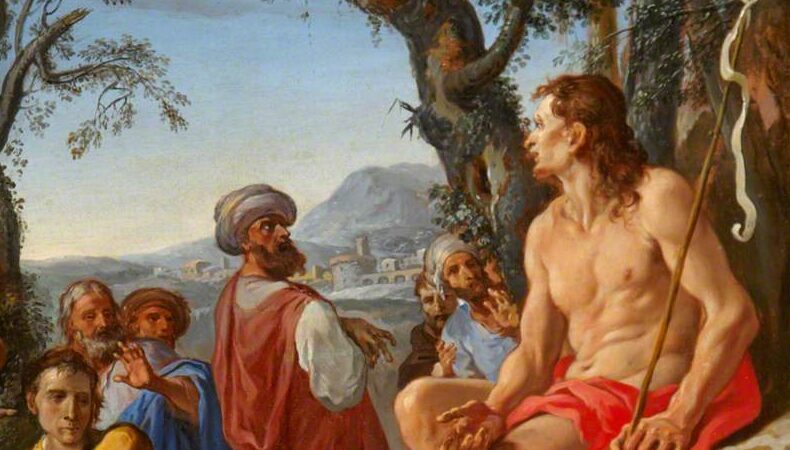
 I’ve often thought that John the Baptist ought to be regarded more seriously as a patron saint of anyone in ministry, especially priests, because, in many ways, he is an icon of hope. His ministry consisted mostly of proclaiming a message and calling people to a new way of life, the results of which he would not see. He proclaimed a kingdom that was coming but still not fully revealed. He pointed people toward the Christ without ever seeing for himself, in Jesus’ death, resurrection and glorification, the full confirmation that he was the Christ. But even though John never got to see the fulfillment of his labors as a messenger of the Christ, he never lost his energy and zeal for his mission. To me, that is the essence of a faith-filled minister of hope. As the author of the Letter to the Hebrews reminds us, “Faith is the realization of what is hoped for and evidence of things unseen” (11:1).
Yes, it is true that John had moments of doubt about what he was doing. As he neared the end of his ministry and his life in a prison cell, John sent some of his disciples to inquire of Jesus if he really were the Messiah who was to come, or if they were to look for someone else (Mt 11:2-3). Jesus did not give an explicit “yes” to John’s question. Instead, he offered evidence that he was the one for whom John had been preparing God’s people all along (Mt 11:4-6). John had to trust that underneath these signs the Messiah to whom John pointed was truly at work in the world.
Therein lies the challenge for all priests about the nature of our lives and our work. We may get glimpses that what we are doing is truly connecting people’s lives with Jesus Christ, but we will not always see explicit confirmation that our ministry is accomplishing what we want it to accomplish. Think of the baptisms and weddings we celebrate for families who never come to church — all the while hoping that at some point their lives will be claimed by Christ. Think of the young people we prepare for confirmation only to see them stop practicing their faith — all the while hoping that the Spirit of Christ will ignite a deeper faith in them. Think of the homilies we diligently prepare for Christmas and Easter — all the while hoping our words might draw the C & E Catholics back to the church more often and into a deeper relationship with the Lord.
So much of what we do as priests does not render the immediate, tangible results we would want. Like John the Baptist, we might even have moments of doubt; we might, like John, ask Jesus for some sign that what we are doing is truly what God wants us to do. And that is where hope must come in. As priests of hope, we need to trust that the grace of God will work in people’s lives in God’s way and in God’s time. Yet God needs us to be agents of that grace. As messengers of the kingdom, we need to have hope that the Word of God penetrates people’s hearts and minds in ways we might not see, much as the germination of a seed in the ground goes unnoticed. Yet God needs our preaching and teaching to plant that seed. As spiritual guides who are to point people to Christ in their lives, our hope allows us to surrender what we do to the manner and mode in which Christ will choose to bring it to fulfillment. But Christ needs us to get things started. And so, John the Baptist, pray that we priests may, like you, be icons of hope!
FATHER SCOTT DETISCH, S.T.L., Ph.D., is a priest of the Diocese of Erie, pastor of St. John the Evangelist Church in Girard, Pennsylvania, and adjunct professor of systematic and sacramental theology at St. Mary Seminary and Graduate School of Theology in Wickliffe, Ohio. He holds a license and doctorate in systematic theology.